Postpartum Bra Size Guide
Stay comfortable while nursing or pumping with supportive styles, smart measurements, and gentle routines.
Build your postpartum rotation
Use the visual guide to plan daily nursing bras, pumping gear, and movement-friendly support so nothing catches you off guard on busy days.
Save the checklist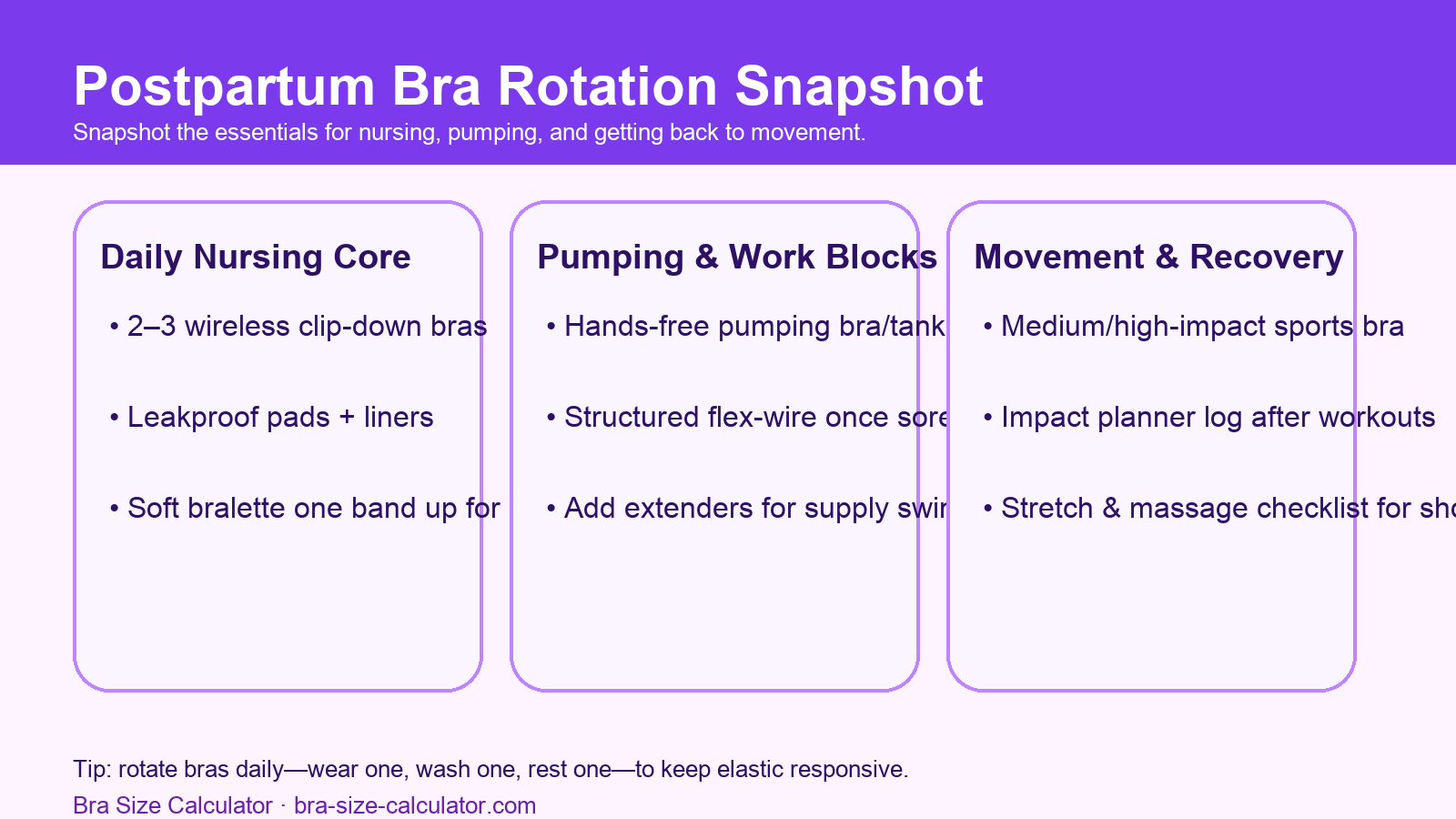
Postpartum Stages & What to Expect
Your body continues to change after delivery. Use this timeline to anticipate adjustments and plan comfort-first solutions.
Breasts may feel firm or engorged as milk supply regulates. Prioritise soft support and easy-access nursing bras.
Sizes begin to settle. Re-measure every few weeks, especially if pumping or feeding routines change.
Workout routines or returning to work may require additional sports or pumping bras. Keep multiple styles on rotation.
Re-measure with Supply Changes in Mind
Milk volume fluctuates. These tips help you capture sizes accurately without adding discomfort.
- Measure band and bust at consistent times—ideally before feeding to account for fullness.
- Use the same units for both measurements and enter them into the calculator to confirm baseline size.
- If you experience clogged ducts or mastitis, wait until swelling subsides before re-measuring.
- Record each measurement with the date to track how quickly size changes slow down.
Supportive Styles to Have on Hand
Gentle support with easy clip-down cups; ideal for early days and overnight comfort.
Keep flange cups secure while freeing your hands—look for adjustable straps and firm bands.
Choose medium/high-impact bras with encapsulation and adjustable bands to manage bounce during workouts.
Provide extra structure once supply stabilises; ensure wires sit behind breast tissue to avoid pressure.
Prepare for Nursing & Pumping
A little planning goes a long way when feeding routines begin. Use this list to stay ahead of comfort hiccups.
- Re-measure about four weeks before your due date to anticipate postpartum size changes.
- Choose nursing bras with extended hook settings or extenders for fluctuating band sizes.
- Look for cups that drop down fully to support comfortable latching or pumping sessions.
- Keep a hands-free pumping bra or tank ready if you plan to express milk regularly.
Hospital bag reminder
Pack two nursing bras or tanks, a pumping bra if needed, and breast pads. Having backups reduces stress when schedules get busy.
Daily Comfort Habits
These practices keep bras supportive and gentle while your body recovers.
- Alternate between two or more bras daily to let elastic recover.
- Air dry bras to preserve stretch and keep fabrics gentle on skin.
- Use nursing pads or liners to manage leaks and protect bra cups.
- Practice shoulder, neck, and chest stretches to relieve feeding posture tension.
Know When to Seek Support
Comfort is important, but persistent pain deserves professional attention.
- Sharp pain, redness, or lumps should be evaluated by a healthcare provider.
- If nursing bras dig into the underarm or sternum, size up in the cup or switch to wireless until swelling subsides.
- Persistent band riding up indicates the need to re-measure or replace worn bras.
Talk to your team
Lactation consultants, midwives, and fit specialists can personalise support. Share how each bra feels and ask for recommendations tailored to your recovery.
Contact usFrequently Asked Questions
How soon after delivery should I re-measure?
Take new measurements 2–4 weeks postpartum once milk supply begins to stabilise. Recheck every few weeks until sizes feel consistent.
How many nursing bras do I need?
Keep at least three: one to wear, one to wash, and one spare. Add a dedicated pumping bra if you plan to express milk regularly.
Can I wear underwire bras while nursing?
Yes, once soreness subsides. Ensure the wire sits behind breast tissue and does not press into ducts. If discomfort returns, switch back to wireless until symptoms improve.